The building envelope check every BC townhouse buyer needs to know
We started looking for a 2-storey townhouse in Walnut Grove, Langley. The older complexes there are genuinely appealing: the floor plans are bigger than anything built in the last fifteen years, the yards are real, and the prices reflect age rather than hype. Most of the inventory we were looking at was built in the late 1980s and early 1990s, which means the buildings are now around 35 years old. That age bracket comes with one issue that every buyer in this market needs to understand before they walk into a single showing.
 Westin Tanley
May 30, 2026 · 8 min read
Westin Tanley
May 30, 2026 · 8 min read
This is not a Walnut Grove problem
The leaky condo crisis was not a Langley problem, or a Fraser Valley problem, or a Lower Mainland problem. It was a province-wide failure that affected attached housing across all of BC wherever the same construction methods were used. The same question you need to ask about a 1992 townhouse in Walnut Grove applies equally to a 1994 complex in Coquitlam, a 1991 row house in Victoria, a 1996 building in Abbotsford, or a 1989 development in Surrey. The geography changes. The rule does not.
The Lower Mainland, Fraser Valley, and Vancouver Island saw the most severe damage because sustained rainfall gave trapped moisture more time and opportunity to rot wood framing. But the underlying construction method was used broadly across the province, and any attached home built in BC between roughly 1982 and 1998 carries the same envelope question regardless of where it sits.
What happened and why
During the 1980s and into the late 1990s, a large share of attached housing in BC was built with exterior cladding systems that did not include a way for moisture to escape. Stucco applied directly over wood-frame construction was among the most common. On the surface these buildings looked ordinary. Behind the cladding, any water that found its way past the outer layer had nowhere to go. It sat against the wood framing and rotted it from the inside, slowly and invisibly, for years before owners had any indication that something was wrong.
The BC government commissioned an independent review that became known as the Barrett Report, published in 1998. It documented tens of thousands of affected units across the province and estimated remediation costs in the billions of dollars. Strata corporations took on large special levies to fund the work. Some buildings were caught early and repaired before severe structural damage occurred. Others were not discovered until the rot had reached framing members. The range of outcomes within the affected building stock was wide, and it still is, because not every complex that needed remediation has yet completed it.
What a rainscreen system is
A rainscreen is an exterior wall assembly built with a deliberate air gap between the outer cladding layer and the structural wall behind it. The gap serves two purposes. It gives any moisture that penetrates the outer surface a path to drain downward rather than pooling against the framing. And it allows air movement that helps the wall dry out after it gets wet. In BC's climate, the difference between an exterior wall that can dry and one that cannot is the difference between a building that ages normally and one that rots.
When a complex undergoes full envelope remediation, the process typically involves stripping all of the exterior cladding, assessing and replacing any rotted framing, installing a proper drainage plane and air gap, and applying new cladding to current building code standards. The result is an exterior that looks newer than the building's age and a strata file with documentation of the entire process. A building that has been through this work has had the problem addressed. The question for every pre-2000 townhouse in BC is whether that work has been done.
How to read the exterior at a showing
Walk the exterior of the complex before you go inside. You have two things to look for: evidence that remediation has happened, and evidence that moisture problems are ongoing or have not been addressed.
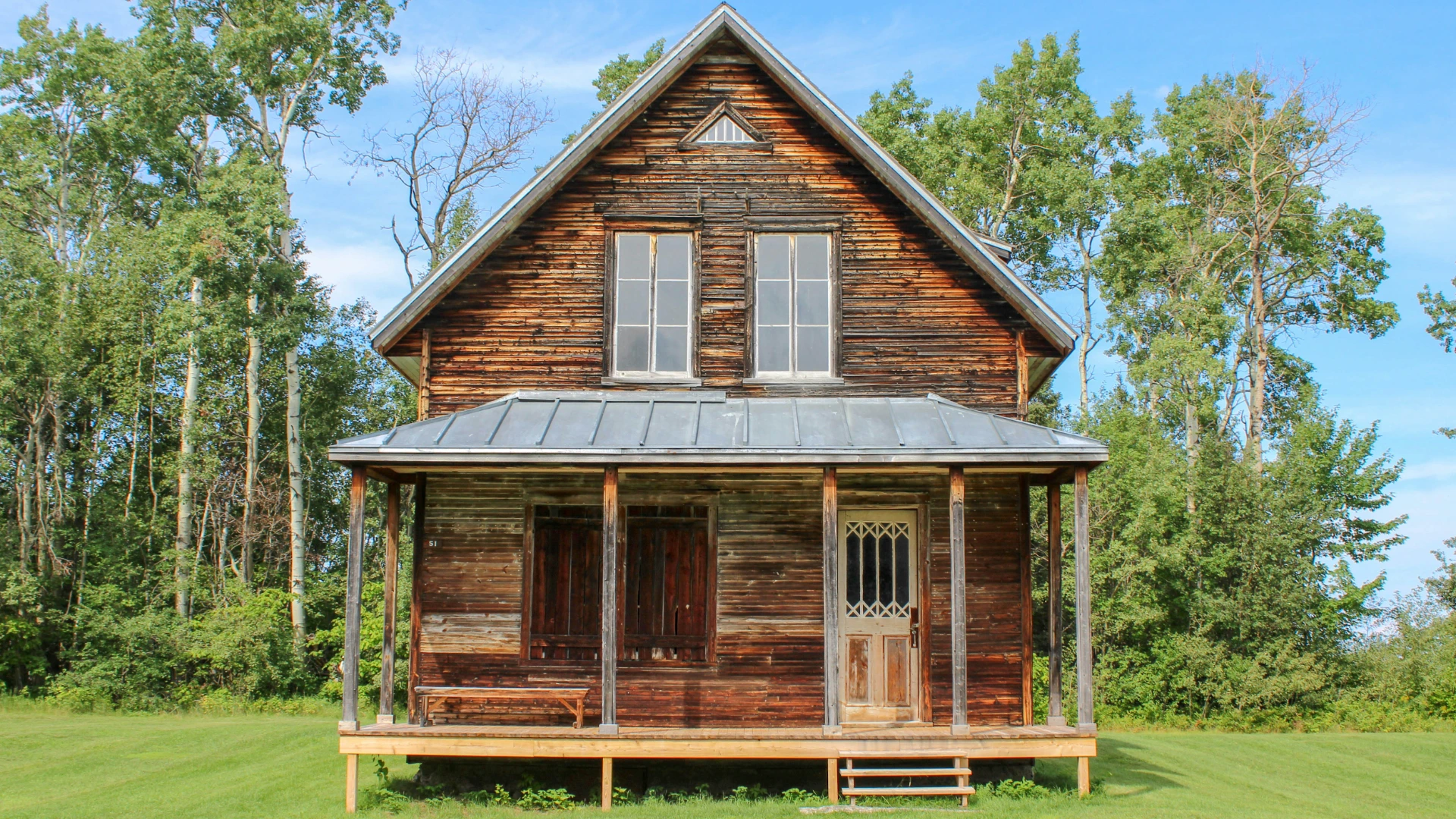
A remediated building often looks visibly newer on the outside than its stated age would suggest. In a Walnut Grove complex built in 1991, cladding and windows that look like they are from 2005 or 2010 are a positive sign worth following up on. The window frames will be clean, the seals will be intact, and the trim at ground level will be solid. The newer exterior does not confirm remediation on its own, but it is a prompt to ask the right question.
An unremediated building, or one with active moisture issues, shows different signs. Staining or discolouration running down from window corners indicates water is tracking through. Soft or spongy wood at the base of the exterior trim or where cladding meets the foundation indicates rot. Multiple rounds of visible caulking applied over gaps in the cladding suggest the complex has been managing moisture at the surface rather than addressing it structurally. Any of these observations justifies harder questions before you go further.
What to ask the listing agent
Ask directly: has the building envelope been replaced, and when? Ask whether the strata has documentation of the remediation. Ask whether there are any active, pending, or recently completed special levies.
A confident, specific answer is what you are looking for. A remediated building should produce one: the work was done in a particular year, the strata file has the records, the levy associated with it was assessed and paid. An agent representing a building that has been through the process will generally know this and say so clearly, because it is a selling point.
A vague response is informative in a different way. If the answer is that the building has been "well maintained" without addressing the envelope specifically, or if the agent is not sure whether the cladding has ever been replaced on a 1993 complex, that uncertainty is meaningful. It does not mean the building has not been remediated, but it means you need to find out before any offer goes in.
What the strata documents should tell you
In BC, a buyer is entitled to a Form B information certificate as part of the sale process, and a buyer's agent can often request the broader strata document package before an offer is made. The documents worth reviewing on a pre-2000 building are the contingency reserve fund balance and most recent depreciation report, two years of strata council meeting minutes, and any engineering reports or remediation records.
The depreciation report lists major building components, their estimated remaining service life, and the projected replacement cost. If the exterior cladding, roof, windows, and drainage systems all show up as approaching end of life and the reserve fund is underfunded, that information changes what the unit is actually worth. The council minutes will show whether envelope issues have been discussed, whether any work has been approved or completed, and whether any levies are in progress.
A well-funded reserve on an older building is a sign of a strata that has been managing its obligations. An underfunded reserve on a 35-year-old complex with no recent envelope work is a sign that the cost is sitting in the future rather than the past.
Other things to check on a 35-year-old building
Once the envelope question is answered, a pre-2000 BC townhouse has other age-related items worth noting during the showing. The furnace and hot water tank have typical service lives of 15 to 20 years and 10 to 15 years respectively. Check the installation dates on the equipment in the utility room. If both are original to a 1991 build, budget for replacement. The windows may be single-pane or older double-pane units with failed seals, visible as fogging between the glass layers. The electrical panel on a 30-to-35-year-old townhouse is likely a 100-amp service, which was adequate in 1991 and may be tight for current loads. Open the panel cover and note the brand and amperage.
These are all manageable items individually. What you are doing at the showing is building a complete picture of what the building needs, so the purchase price and your budget reflect reality rather than what the listing photos show.
How Tour 21 keeps the details straight across multiple showings
A busy open house weekend in Walnut Grove — or Coquitlam, or Surrey, or anywhere else in BC with a strong pre-2000 townhouse inventory — can mean four or five different complexes in a single afternoon, each with a different envelope history, a different strata fee, and a different set of details to track. The envelope conversation you had at the second building starts to blur into the third by the time you reach the fifth.
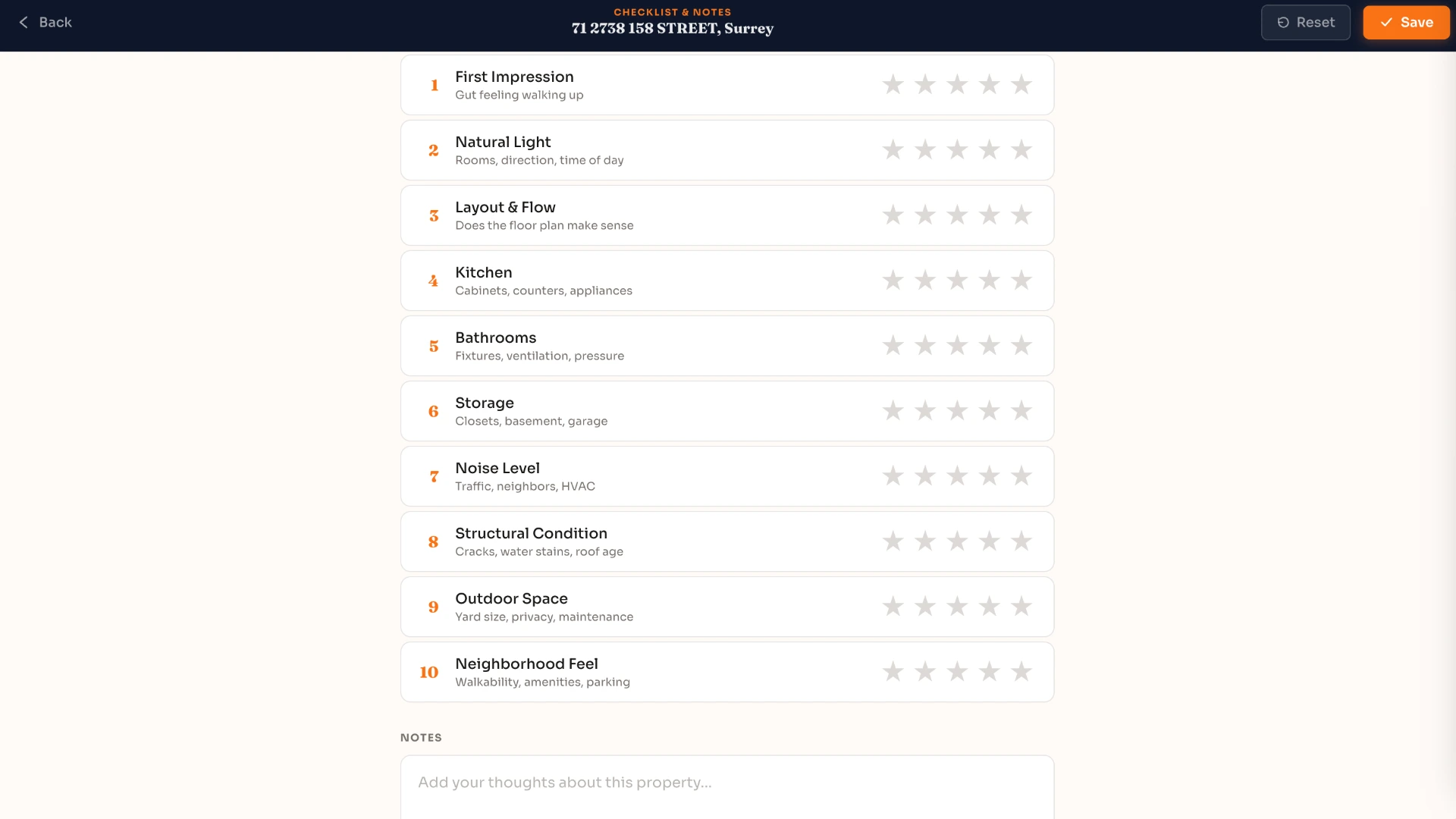
Tour 21 lets you add each realtor.ca listing before the day starts. During the showing, use the note panel on any property card to record what the agent said about remediation, the strata fee and what it covers, the ages of the mechanical equipment, and anything you observed on the exterior. Those notes are attached to the property and available that evening when you sit down to compare your options.
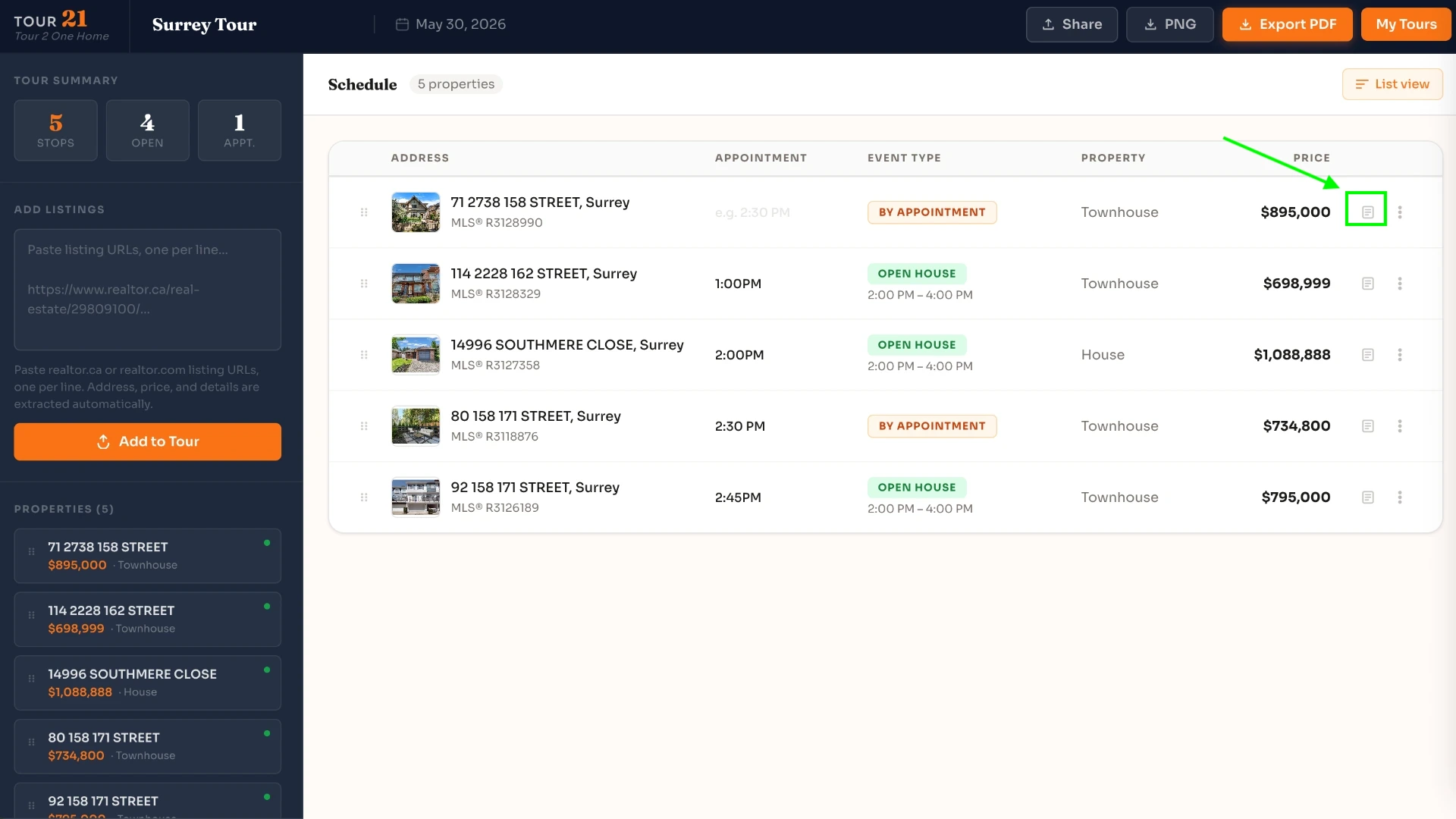
Write the envelope conversation down specifically. A note that says "agent confirmed remediation 2009, records in strata file, levy paid and closed" is far more useful three days later than a general impression that the building looked newer. A note that says "agent unsure about cladding history, exterior looks original" is equally useful, and it tells you what to follow up on.
Frequently asked questions
What is the leaky condo crisis in BC?
The leaky condo crisis was a province-wide building failure affecting thousands of attached homes built in BC primarily between 1982 and 1998. Buildings were clad in materials that trapped moisture behind the exterior surface, rotting the wood framing from the inside. The Barrett Report commissioned by the BC government in 1998 documented the scale of the problem. Buildings that have since been remediated had the envelope stripped and rebuilt with a proper rainscreen system.
Does the leaky condo issue apply outside Vancouver?
Yes. The problem affected attached housing across the entire province wherever the same construction methods were used. The Lower Mainland, Fraser Valley, and Vancouver Island saw the most severe cases because of high rainfall, but the same pre-2000 envelope question applies to townhouses in Langley, Surrey, Coquitlam, Abbotsford, Victoria, and anywhere else in BC where attached homes were built in the affected period.
What is a rainscreen system?
A rainscreen is an exterior wall system with an air gap between the cladding and the structural wall. The gap lets moisture drain down and evaporate rather than sitting against wood framing. Buildings remediated after the leaky condo crisis were rebuilt with rainscreen construction. Buildings that have not been remediated may still have the original trapped-moisture design.
How do I know if a pre-2000 BC townhouse has been remediated?
Ask the listing agent and request the strata records. A full remediation will have documentation: council minutes, engineering reports, contractor records, and the special levy history. The exterior will show newer cladding and windows that do not match the original build date. A vague answer or an exterior that looks unchanged from 1993 are both reasons to investigate further.
Is a pre-2000 BC townhouse worth buying?
Yes, if the envelope question is answered. Older townhouses often have larger floor plans, bigger outdoor spaces, and lower prices than newer builds. The buildings that have already been remediated have absorbed the cost and the disruption. The risk is buying into a complex where that work has not yet been done and a future levy is possible. A strata document review before making an offer is worth the cost.
Conclusion
We started this search in Walnut Grove and learned quickly that the envelope question is not specific to any one neighbourhood or city. Any attached home built in BC before 2000 carries the same consideration, wherever it sits. The older buildings that have already been remediated are often the better buy: more space, lower price, and the expensive problem already behind them. The ones that have not are a different kind of risk. Walk the exterior before you go inside, ask the agent directly, and record what you hear. Build your showing schedule on Tour 21 so the details from each complex are still there when you need them.